
 Best Paper Award

2026
Federal University of Santa Catarina: Computer Science
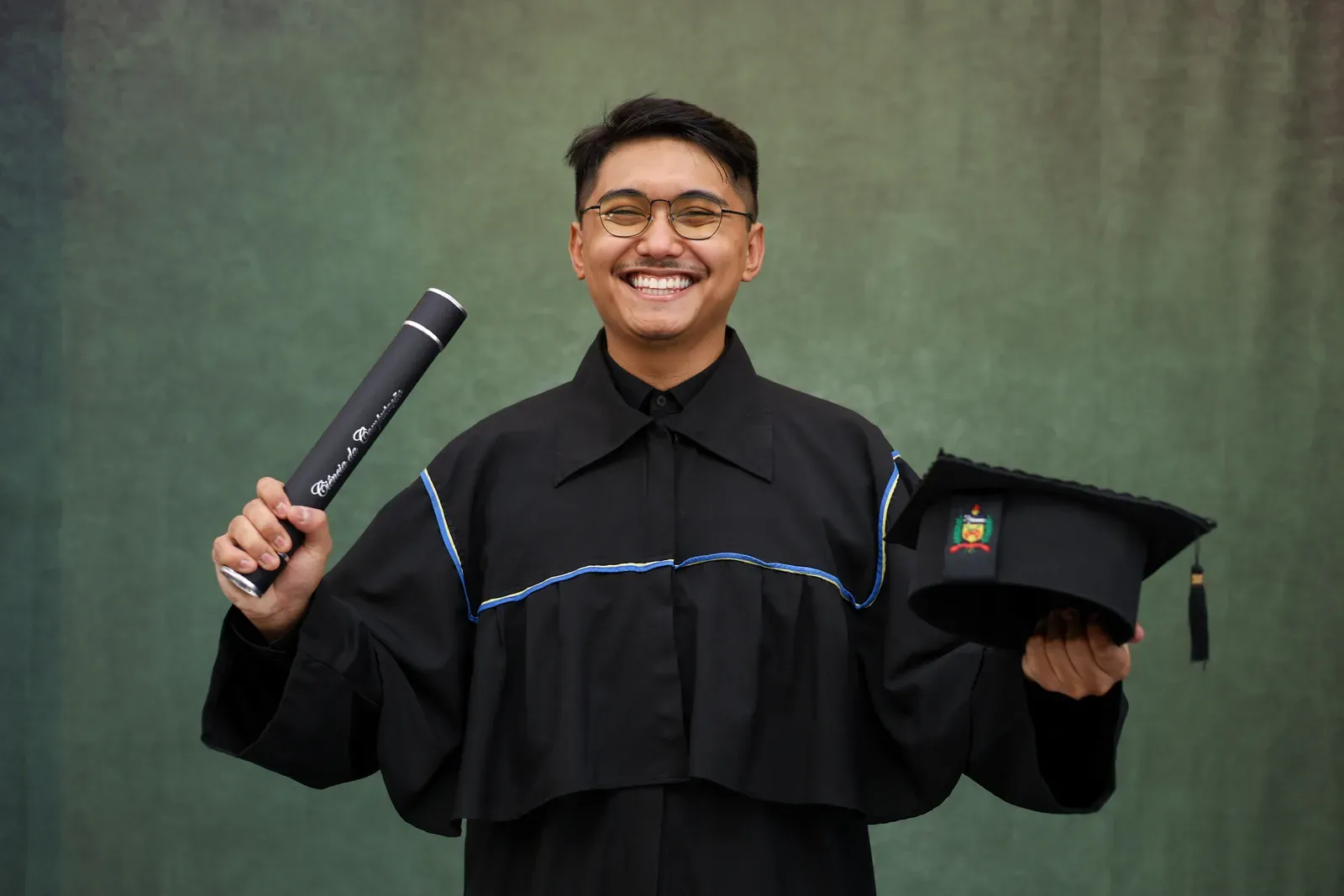
Bachelor's degree in Computer Science from UFSC, completed in 2026.

Forward Deployed Product Designer specializing in AI, with over 7 years of experience.
I work alongside product and engineering teams, from understanding the problem to implementation.
I research design and AI at UFSC, in Brazil, and I'm writing Design na era da IA, a book in Portuguese forthcoming from the publisher Casa do Código.
Founder of Xikota Design and Chapter Lead of The AI Collective Florianópolis.
As a Forward Deployed Product Designer, I designed and implemented the workout sticker in React Native. For the GPS recorder, I led research, design and the engineering handoff.
In practice, I was head of product at a German SaaS and trained a junior product designer. I split producer and affiliate into two contexts of the same product. When the guided tour failed, I turned the dashboard itself into the tutorial, with progress in plain sight.
My first version of the Pé-de-Meia enrollment form put everything on one page and increased abandonment. The second split the flow into steps that save progress, so students pick up where they left off when the connection drops.
A social product published for iPhone, with a documented contribution to product design, visual identity, and motion. The case covers presence, Crowds, channels, and the AI direction without confusing prototypes with releases.
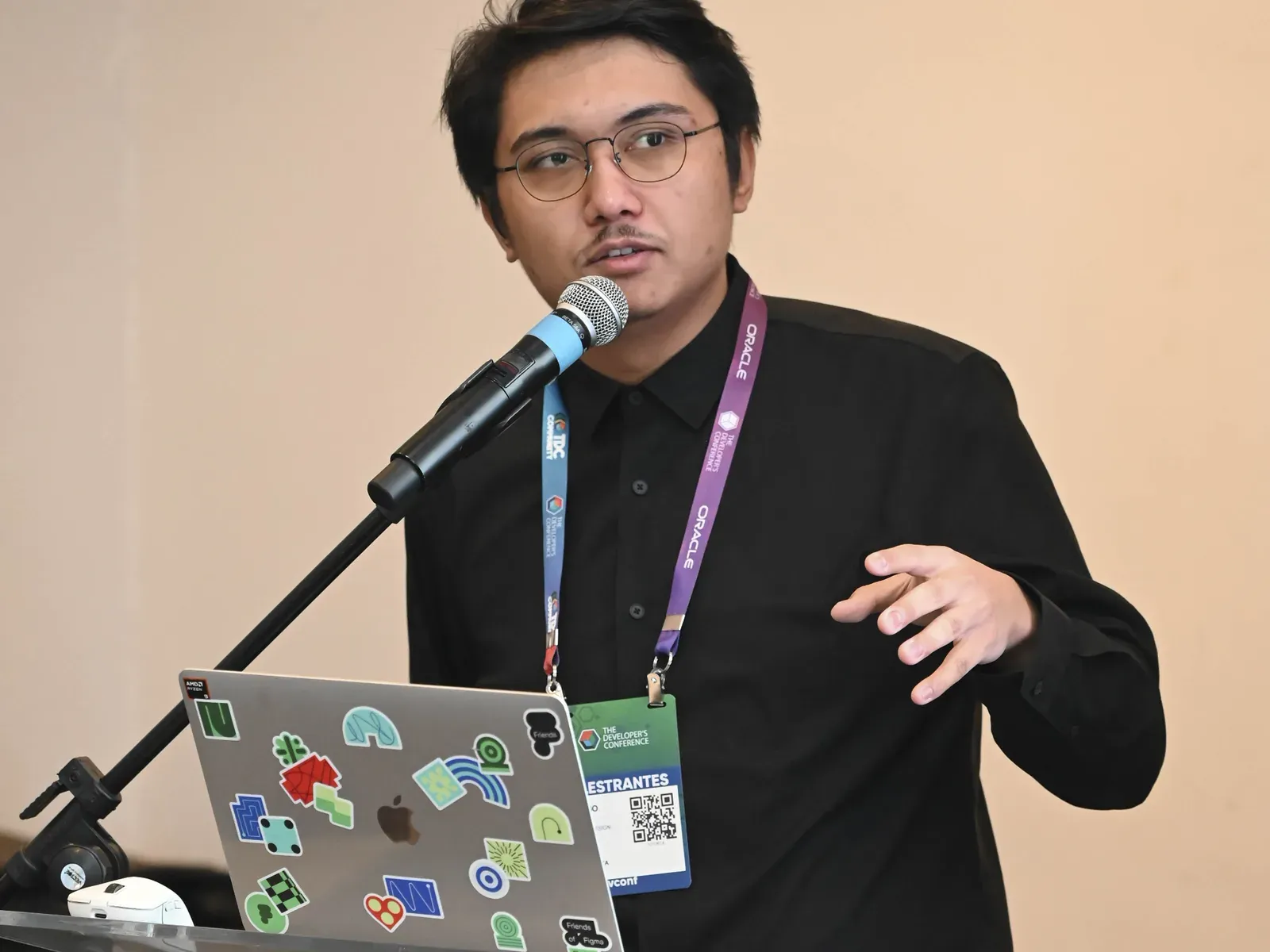
A co-authored paper that won the Best Paper Award at AIMEDIA 2026, a recorded talk, and my undergraduate thesis comparing the accessibility of two design systems, Bold and DSGov.
A book in Portuguese with Casa do Código on how designers and product teams can use artificial intelligence with judgment, ethics, and safer workflows.
In production with Casa do Código
Open book pageOpen the topic you want to explore. My story and the experience behind my work are here.
I'm Thiago, a product designer born and raised on the island of Florianópolis, in southern Brazil, in a Japanese-Brazilian family (yonsei, fourth generation). I like understanding how things work and questioning what seems obvious. I spend my days turning messy problems into products people can actually use.
I started in design in 2019, before AI became a mandatory topic. Since then I've worked at Wellhub, Multidrop and Laboratório Bridge, where I helped design a platform for Brazil's Ministry of Education used by millions of students. I earned my degree in Computer Science at UFSC, with an exchange in applied computer science and AI at Sapienza, in Rome.
Today I work as a Forward Deployed Product Designer specializing in artificial intelligence. I work closely with product and engineering teams to turn problems into working products. At Zyla, I designed and implemented the workout sticker in React Native and took the GPS recorder through research, design and engineering handoff.
I'm also the founder of Xikota Design, my design studio, and I lead The AI Collective Florianópolis, the first chapter in southern Brazil. I do research at UFSC, I'm writing a book (on its way with Casa do Código) and, in my free time, I teach Japanese music to young people at the local Japanese association.
I still believe in design made for people, with people: conversation, repertoire and critical judgment. AI speeds up a lot of things. Deciding what's worth building is still on us.


I founded Xikota Design. A digital product design and build studio: websites, apps, and design systems, from problem to shipped product.
I lead The AI Collective's first chapter in southern Brazil and organize hands-on meetups for people building with AI. The launch event, on July 1, 2026, had about 95 sign-ups.
As a Forward Deployed Product Designer at Zyla, I designed and implemented the workout sticker in React Native. For the GPS recorder, I led research, design and the engineering handoff.
I worked on end-to-end product journeys at global scale and on accessibility, ensuring WCAG 2.1 AA conformance (focus order, semantics and ARIA) on the screens I designed. Wellhub is a corporate wellness platform with more than 5 million subscribers in 18 countries.
Effectively head of product: handled design and product management and trained a junior product designer. Worked on the activation redesign that reduced onboarding abandonment from 50% to 25% and supported growth from 0 to 100 paying clients.
Jornada do Estudante, an app for Brazil's Ministry of Education (MEC) with 14 million users, built at Laboratório Bridge (UFSC). I redesigned the Pé-de-Meia enrollment form so it saves every step, and designed a dedicated screen for each eligibility status.
I organized and hosted the 3rd edition of Pixel Init in 2021: three online evenings, nine speakers from UFSC and from companies such as Google, Nubank and SAP, and more than a thousand sign-ups.
Formal training, international study, and continuous learning shaped around product, systems, and implementation.
Formal education
2026
Bachelor's degree in Computer Science from UFSC, completed in 2026.

2025-2026
Exchange in Applied Computer Science and AI at Sapienza University of Rome, focused on AI systems, research, and the technical foundations behind modern workflows.

2024-2025
Completed the Italian Language Course (Level B2) at the Pontifical Lateran University in 2025, strengthening communication skills and cultural fluency during my academic period in Rome.

2018
Completed a year of high school in Vancouver, improving English fluency and experiencing cultural exchange through daily academic life in a Canadian environment.
Languages
Continued learning
Recent coursework across UX research, accessibility, design systems, AI, and front-end implementation.
UX Unicórnio
UX Unicórnio
I work closely with product and engineering, from the problem to implementation. These deliverables show where I used code, data and AI, and who owned each part.
At Zyla, I designed and implemented the workout sticker in React Native. For the GPS recorder, I carried out technical research, design and the engineering handoff.
See design and code at ZylaAt Multidrop, I built tokens and components with governance shared with engineering. At PariPassu, I designed a foundation with over 110 components for two products.
View the PariPassu case studyIn my undergraduate thesis, I audited the Bold and DSGov documentation: 277 A and AA nonconformities. I co-authored the award-winning AIMEDIA 2026 paper, an exploratory AI design pilot (n=5 per group).
See the research and its limitsProduct & UX craft
At Bridge, on a platform with 14 million users, the Pé-de-Meia student benefit had 8+ possible eligibility statuses, 6 of them genuinely ambiguous. A good share of helpdesk tickets boiled down to "I don't understand my status". At Multidrop, the context switcher was buried in settings, so users worked in the wrong context without noticing. I design for the scenarios most people ignore.
DSGov, the Brazilian government's design system, failed 8+ WCAG 2.1 AA criteria. I fixed it in code with the devs: semantic HTML, ARIA and focus order, without changing a single pixel of the spec. The clarity came in the invisible layer: keyboard navigation, screen readers, states that announce themselves properly. Accessibility isn't compliance. It's a design tool.
At Multidrop, I built the design system from scratch: color, spacing and type tokens, the grid, governance shared with engineering. It was the precondition for two very different user types to coexist in one product. A good design system changes how the whole team makes UI decisions, not just how the screen looks.
Product, design and engineering people I've worked with. Each name opens their LinkedIn profile.
Notes on design, product strategy, accessibility, and how AI changes the way design teams work.
Articles are written in Portuguese.
Accessibility goes in as an acceptance criterion from the start, so it doesn't turn into rework at the end. At Laboratório Bridge, I fixed DSGov's WCAG 2.1 AA failures in code with the developers (semantic HTML, ARIA and focus order) without changing the visual spec.
Read the Bridge case (in Portuguese)I have a Computer Science degree and write React. At Multidrop, I built the design system from scratch, with color, spacing and type tokens and governance shared with engineering.
Read the Multidrop case (in Portuguese)To generate variations, prototype in code and automate repetitive work, always under my direction and review. I specify before I generate: in the pilot from the paper I co-authored for AIMEDIA 2026 (n=5 per group, a small sample), all five runs without a designer produced the same information hierarchy.
Read the studyBy the change in behavior, measured before and after. At Multidrop, after the activation redesign, onboarding abandonment fell from 50% to 25% (n=3.1k, 30-day window). When I don't have a number, I say so: at Bridge, the drop in eligibility tickets came from the support team's reports, with no A/B test.
Working on a product that needs design direction or AI in the workflow? Tell me what you're building.
thiagoxikota@gmail.com
Quick chat
. Opens in a new tabAI Product Club
A monthly product newsletter