PariPassu: Rastreador e CliCQ
Product Designer (equipe de 2 designers)
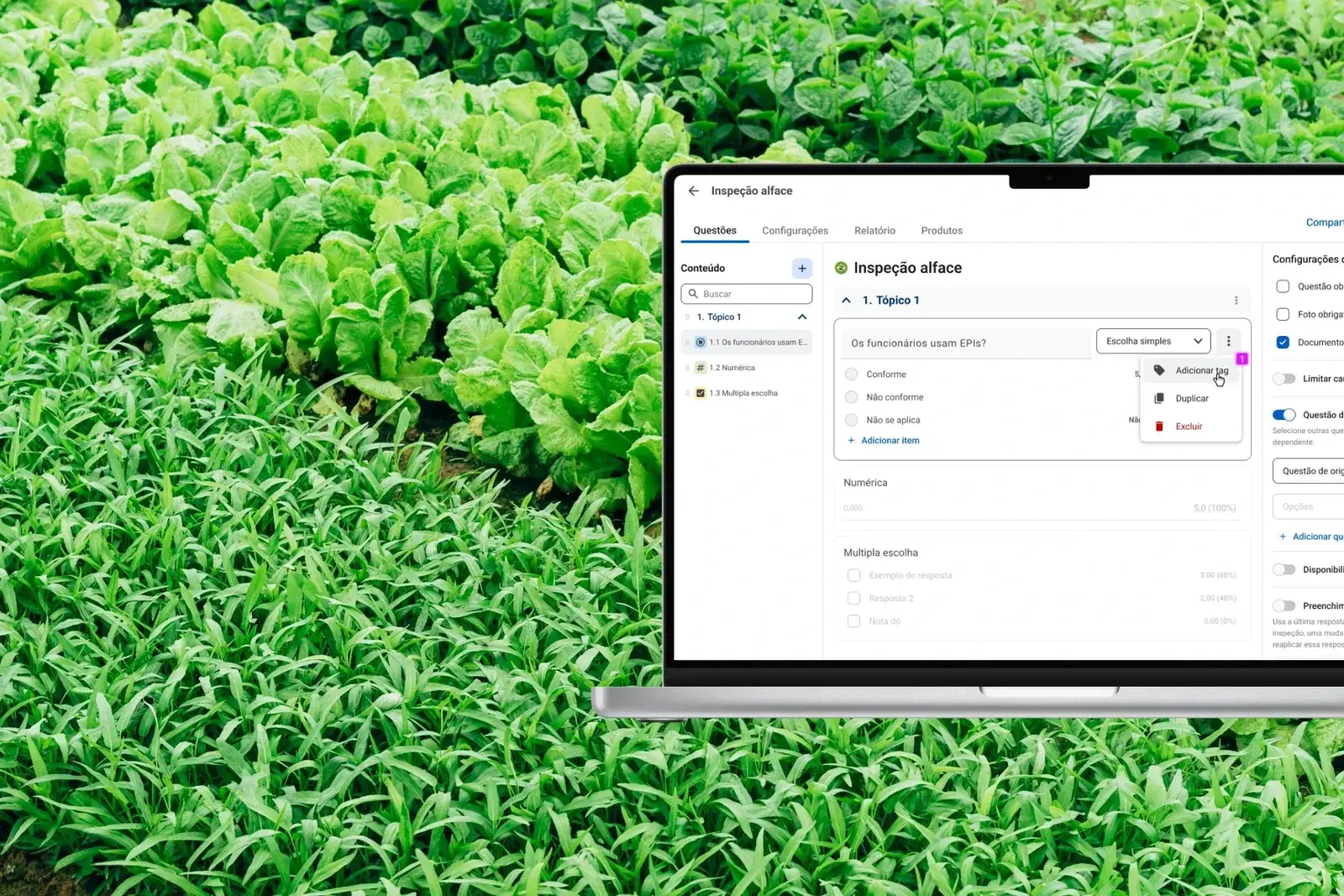
A PariPassu é uma agtech/foodtech que conecta a cadeia de suprimentos alimentar: do produtor rural ao varejo. Trabalhei como uma das duas designers da empresa (~100 pessoas) em features-chave de dois produtos: o Rastreador (rastreabilidade de compra e venda com integração a ERPs como TOTVS e Sankhya) e o CliCQ (inspeções de qualidade com workflow builder condicional, formulários customizáveis e app mobile). Contribuí com componentes ao design system existente e participei de sua manutenção de forma colaborativa. Clientes incluem operações da Coca-Cola LatAm.
2
produtos (Rastreador + CliCQ)
2
designers, trabalho colaborativo
ERP
integrações (TOTVS, Sankhya)
- Two products, collaborative design work
- Contributions to existing design system
- ERP integrations (TOTVS, Sankhya) and workflow builder
Contexto Estratégico
Escopo: Designer em foodtech/agtech de ~100 pessoas, atuando como uma das duas product designers do time. Responsável por features-chave em dois produtos: Rastreador (ERP + rastreabilidade) e CliCQ (inspeção de qualidade + workflow builder).
Autoridade de decisão: UX/UI end-to-end nos dois produtos, com discovery junto a operadores da indústria, priorização com PM/CEO e contribuição contínua ao design system existente. Trabalhei em par com a outra designer pra alinhar padrões entre Rastreador e CliCQ.
Timeline: 6 meses (jun 2025 - nov 2025), entregando features críticas em Rastreador e CliCQ enquanto contribuía com o DS existente.
Resultado estrutural: Contribuí com 10 componentes novos ao DS já existente, padronizei o handoff entre os dois produtos e implementei um pipeline Figma + Make + MCP que reduziu retrabalho de specs e acelerou a sincronização com desenvolvimento.
O Ecossistema
A PariPassu está na interseção entre ag-tech e food-tech: rastreabilidade e conformidade alimentar. Dois produtos distintos: Tracer (rastreabilidade de cadeia alimentar) e CliCQ (auditorias e conformidade), cada um servindo personas diferentes: operadores de campo e coordenadores de qualidade.
O DS já existia quando entrei, mas estava desalinhado entre os dois produtos, que haviam crescido independentemente por anos. ~40% do tempo de sprint era gasto em specs visuais repetitivas que poderiam estar padronizadas.
Dois produtos, zero design system. 40% do tempo de sprint em specs visuais repetitivas.
Design System: Gestão e Adoção
O design system já existia quando entrei. Meu trabalho foi gerir a evolução em colaboração com a outra designer, contribuir com 10 componentes novos e padronizar o handoff entre Tracer e CliCQ.
Adoção colaborativa: Comecei pelos componentes de alta frequência (inputs, botões, tabelas) com documentação de uso e guia de "quando NÃO usar". Pareamento semanal com cada dev pra alinhar uso real e ajustar tokens.
Automação de handoff: Construí um pipeline Figma → Make → MCP: quando um componente é publicado, as specs são extraídas automaticamente e notificam os devs no Slack com cores, tamanhos, variantes e link direto. Reduziu fricção de handoff sem precisar rebuild do DS.
Mês 1: 45% de reuso. Mês 4: 82% (medido via Figma Analytics). Handoff: ~4h -> ~2.5h por tela (30 tickets).
Tracer: Importação de Arquivos
A importação era o maior ponto de atrito. Operadores registram centenas de movimentos de cadeia alimentar via planilhas legadas. A interface anterior: um único campo de upload sem validação, feedback ou rastreamento de progresso. Resultado: arquivos com erros silenciosos, dados corrompidos e chamados de suporte frequentes.
Solução: validação em linha durante o upload, mapeamento de colunas com preview, estados de erro explicando exatamente qual linha falhou e por que.
Tracer: Compras e Sincronização ERP
A tela de Compras mostra a complexidade da cadeia alimentar. Defendi: status "Sincronização pendente" como feedback explícito em vez de spinner infinito. Engenharia queria esconder a latência, mas argumentei que, para coordenadores de qualidade, saber que os dados estão sendo sincronizados é crítico para conformidade. A tela exibe fornecedores, lotes, volumes e status de sincronização ERP simultaneamente.
CliCQ: Construtor Visual de Fluxos
O desafio mais difícil. Usuários não técnicos da indústria alimentícia precisavam construir lógica condicional, basicamente programação visual, sem vocabulário técnico. Primeira tentativa: formulário sequencial. 0 de 3 usuários concluíram. Descoberta: eles pensavam em fluxos espacialmente, não linearmente.
Segunda tentativa: canvas visual com nós arrastáveis. 3 de 3 concluíram em menos de 5 minutos. O que importou: correspondência entre o modelo mental deles e a interface.
Formulário sequencial: 0/3 concluíram. Canvas visual: 3/3 concluíram em menos de 5 minutos.
CliCQ: Formulários e Inspeções
Construtor de formulários com 7 tipos de pergunta, cada um com 3 estados. Templates de inspeção personalizáveis. O componente mais complexo: lógica de ramificação condicional para mostrar/ocultar perguntas com base em respostas anteriores. Construído para usuários de campo em tablets com conexão intermitente: todos os rascunhos salvos localmente primeiro, sincronizados quando online.
O que a pesquisa revelou
“Cada agroindústria usava layouts de coluna diferentes nos seus relatórios de rastreabilidade.”
Insight: Auto-detecção de colunas causaria erros de mapeamento, e erros nesse contexto têm impacto regulatório.
Decisão: Optamos por mapeamento manual com validação visual. Mais lento, mas eliminava risco regulatório.
Impacto além da tela
Como uma das duas designers de uma foodtech de ~100 pessoas, trabalhei em colaboração com o time de engenharia e com a outra designer para contribuir com features em dois produtos e para somar componentes ao design system já existente. O aprendizado mais forte foi sobre adoção orgânica: o padrão só vira referência quando outros designers e devs começam a rejeitar pedidos fora dele, sem ninguém precisar impor.
Vamos trabalhar juntos
Tem interesse em trabalhar comigo?
Eu desenho experiências de produto para milhões de usuários. Com mais de 7 anos entre startups, scale-ups e empresas de diferentes contextos, gosto de criar interfaces acessíveis, refinadas e com impacto real no negócio.